Having a defined and documented content strategy is a key component of any successful content marketing operation.
TABLE OF CONTENTS
• Default Content Strategy Fields
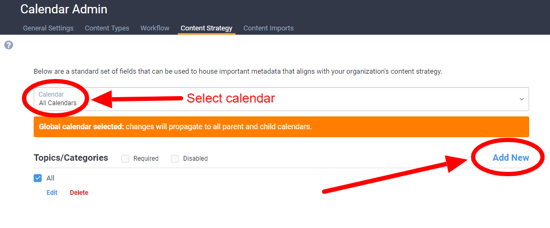
• How to Load Content Strategy Fields
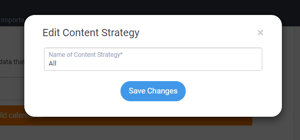
• Editing a Content Strategy Value
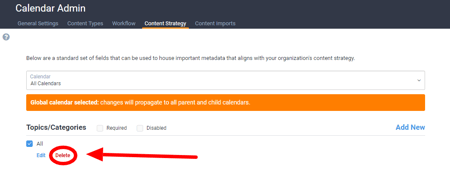
• Deleting A Content Strategy Value
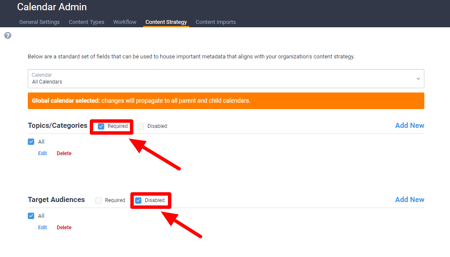
• Requiring or Disabling Content Strategy Fields
Typical content strategy exercises include identifying your target audiences (profiles/personas), being thoughtful about the content topics they care about and having a plan for how to produce and deliver that content to them on a consistent basis.
With these best practices in mind, DivvyHQ provides several common, content strategy fields that can be preloaded with metadata that you've identified through your content strategy process. This allows you to mold your content strategy into the application, tag your content appropriately, and use this valuable metadata for various filtering and reporting purposes.
Default Content Strategy Fields
Content strategy metadata can be preloaded on a per calendar basis or at the Parent and All Calendars level. You can preload the following default content strategy fields:
• Topic/Categories – Allows you to track certain topics and categories essential to your content strategy.
• Target Audiences – With whom does your content need to reach and resonate? Keep yourself and your team focused in on those individuals during content production.
• Buyer Stages – Have you mapped your buyer's journey? Which content types or topics would be most effective at each stage? Organizations who are thoughtful about this often "win".
• Publishing Channels – To which channels do you publish content? Preload your publishing channels so your team knows where each piece will ultimately live.
• Promotional Channels – Will you be promoting your content after it's published? Keep your team on the same page.
• GeoLocation - If you are geo-tagging or geofencing your target audience, you may want to use the geolocation field to tag your content properly.
• Keywords/Tags – We all know the power of Google. A keyword-centric content production and optimization effort should be part of any content marketing program. Keep your keywords top of mind whenever you are creating content by making use of this field.